
Cultural heritage materials are traditionally accessible either to highly trained professionals or in the form of manually produced translations with hand-crafted background information. The challenge today is to design fields that are accessible across barriers of language, culture and immediate intent: we are beginning to design fields for translation, customization and personalization. This talk looks at the interaction between wholly automated and largely general systems and the knowledge structures on which particular domains depend. On the one hand, we need to update our models of intellectual activity to keep pace the already present and rapidly emerging practices. At the same time, as we identify new services to support new activities, we need to develop methods whereby we can mine the machine actionable data from vast libraries of legacy print data available as page images and scalable accept user contributions of every type. One goal in the next five years is to have available for speakers of Arabic and Chinese the core data about Greco-Roman culture and then to make available corresponding materials about Chinese and Arabic culture to the English speaking public. This involves a suite of data driven services that provide high performance results for particular domains.
Cyberinfrastructure for Global Cultural Heritage
April 29, 2008
Speaker Bios
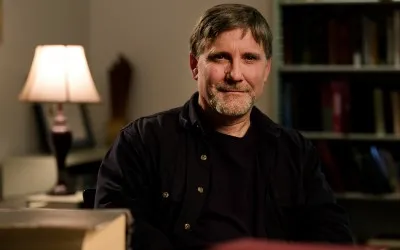
Gregory Crane is Professor of Classics and Winnick Family Chair of Technology and Entrepreneurship at Tufts University. He is also the founder and director of the Perseus Project, which has been working on digital libraries and cyberinfrastructure for twenty years. He is directing projects aimed at developing a coherent cyberinfrastructure for cultural heritage in general and for Greco-Roman culture in particular.