
Past Research Projects
127 projects shown
Broadcasting Audiovisual Data
Using linked data and local authority aggregators to enhance discoverability for broadcasting collections
2021 – 2022
An expansion of the Unlocking the Airwaves project, Broadcasting A/V Data will virtually link together four complementary collections of educational radio, community radio, and public radio history, using a linked open data framework.

Early Modern Soundscapes
English ayres & their dynamic acoustic environments
2019
Early Modern Songscapes is a project exploring the circulation and performance of English Renaissance poetry.
OpenITI AOCP: The Open Islamicate Texts Initiative Arabic-script OCR Catalyst Project
2019 – 2021
With generous funding from The Andrew W. Mellon Foundation, OpenITI AOCP will create a new digital text production pipeline for Persian and Arabic texts. OpenITI AOCP will catalyze the digitization of the Persian and Arabic written traditions by addressing the central technical and organizational impediments stymying the development of improved OCR for Arabic-script languages.
Music Encoding Conference
2018 – 2018
Music encoding is a critical component of the emerging fields of digital musicology, digital editions, symbolic music information retrieval, and others. At the centre of these fields, the Music Encoding Conference has emerged as an important cross-disciplinary venue for theorists, musicologists, librarians, and technologists to meet and discuss new advances in their fields. The theme of the 2018 Music Encoding Conference is “Encoding and Performance,” and will explore the relationship between music encoding and performance practice.

Unlocking the Airwaves
2018 – 2020
Unlocking the Airwaves: Revitalizing an Early Public and Educational Radio Collection is a multi-institutional collaboration between MITH, the University of Wisconsin-Madison, the Wisconsin Historical Society, and the University Libraries at the University of Maryland, with collaborative support from the American Archive of Public Broadcasting at WGBH/Library of Congress, and the Radio Preservation Task Force. The goal of the project is to create a comprehensive online collection of early educational public radio content from the National Association of Educational Broadcasters (NAEB).
Umbra Search and the Future of Black Digital Platforms Pre-Conference
2018 – 2018
Together Umbra Search African American History and the African American History, Culture, and Digital Humanities (AADHum) initiative at the University of Maryland organized a working meeting on digital collections and platforms focused on African American history and culture.

Frankenreads
2017 – 2018
Frankenreads is an NEH-funded initiative of the Keats-Shelley Association of America and partners to hold a series of events and initiatives in honor of the 200th anniversary of Mary Shelley’s Frankenstein, featuring especially an international series of readings of the full text of the novel on Halloween 2018.
Textual Embodiments: 2017 Society for Textual Scholarship Conference
2017 – 2017
In May 2017, MITH and the African American Digital Humanities Initiative (AADHum) are hosting “Textual Embodiments,” the Society for Textual Scholarship’s 2017 International Interdisciplinary Conference.
Books.Files: Assessing Digital Assets in the Book Industry for Scholarly Use
2017 – 2018
Books.Files, a Mellon-funded collaboration between MITH and the Book Industry Study Group, is a project to assess the potential for the archival collection and scholarly study of digital assets associated with today’s trade publishing and bookmaking. Bringing scholars and publishers together at a May 2018 convening and punctuated by a series of site visits and interviews, the study will culminate in a white paper in early 2019.
Using the Digital to Engage Archival Radio Collections
A Panel and Workshop on Sound Studies & Digital Humanities Crowdsourcing Strategies
2017 – 2017
This panel and workshop, planned in conjunction with the 2017 Radio Preservation Task Force Conference, focused on innovative workflows for crowdsourcing linked data to build a web of data that can bridge collective heritage. Panelists discussed their work and research in crowdsourcing or linked open data for radio collections, followed by a Wikidata workshop demonstrating how it can be used to connect archival radio collections to a broader web-based community of knowledge.\r\n

Endangered Data Week
2017 – 2018
Led by the Digital Library Federation, Endangered Data Week, February 26 - March 2, 2018, is an international, collaborative effort, coordinated across campuses, nonprofits, libraries, citizen science initiatives, and cultural heritage institutions, to shed light on public datasets that are in danger of being deleted, repressed, mishandled, or lost. The goals of Endangered Data Week are to promote care for endangered collections by publicizing the availability of datasets; increasing critical engagement with them, including through visualization and analysis; and by encouraging political activism for open data policies and the fostering of data skills through workshops on curation, documentation and discovery, improved access, and preservation.
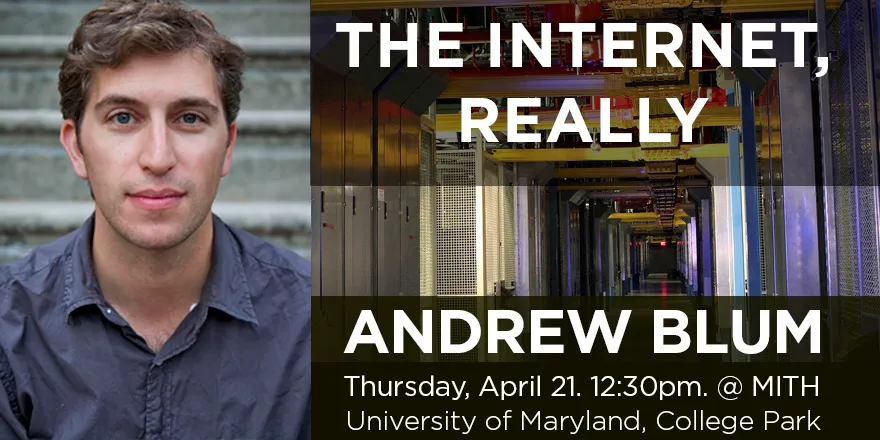
Andrew Blum Lecture: "The Internet, Really"
2016 – 2016
Popular understanding of the Internet’s physical reality has changed dramatically in the past half-decade, with consequences for privacy and security. Drawing on the research in his book, “Tubes: A Journey to the Center of the Internet,” journalist and author Andrew Blum will argue for a continued emphasis on the Internet’s real-world geography.

Documenting the Now
Supporting Scholarly Use and Preservation of Social Media Content
2016 – 2021
Documenting the Now responds to the public’s use of social media for chronicling historically significant events as well as demand from scholars and archivists seeking a user-friendly means of collecting and preserving digital content.
Art History in Digital Dimensions
2016 – 2016
A three-day symposium in Washington, D.C. and College Park which aims to unite diverse audiences and practitioners in a critical intervention for the digital humanities and digital art history, providing a cogent and inclusive road map for the future.
Night Against Hate
2016 – 2016
The Southern Poverty Law Center’s Extremist Files provides a list of known hate groups. At our Night Against Hate event we will collaboratively try to link the SLC list to social media accounts. This list can then be used by researchers here at UMD and elsewhere to examine the effect that these groups are having online. In addition, we hope to use this event to learn from each other about emerging tools and techniques of self care while working online.
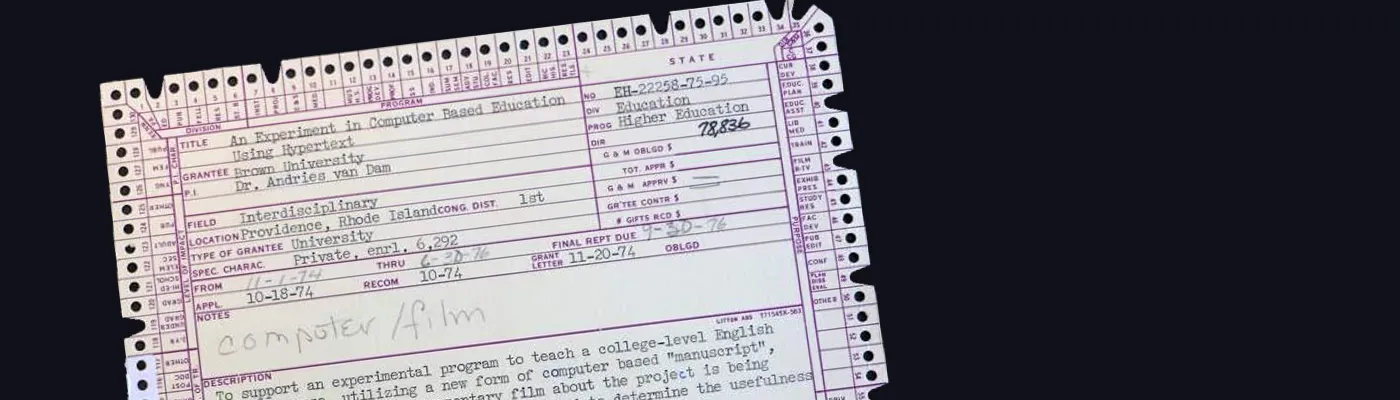
Computer Science and the Humanities Then and Now
A Film Screening and Discussion with Andy van Dam
2016 – 2016
This screening features Brown University’s Andy van Dam and his 1974 documentary about an NEH-funded project to “support an experimental program to teach a college-level English poetry course, utilizing a new form of computer based ‘manuscript,’ called a hypertext.” The screening is followed by a panel discussion and Q&A, moderated by MITH’s Matt Kirschenbaum.
The Transgender Usenet Archive
2016 – 2017
2016-17 Winnemore Digital Dissertation Fellow Avery Dame spent his fellowship year building the Transgender Usenet Archive, a public archive of posts from five targeted Usenet newsgroups which grew in popularity during the 1990’s upswing in online discussion forums, in this case around groups which were central to the development of a transgender community.\r\n
Citations: The Renaissance Imitation Mass (CRIM)
2015
Citations: The Renaissance Imitation Mass (CRIM) will extend the idea of the quotable text for music in an innovative and open way. The focal point of our inquiry is the so-called “imitation” Mass, a Renaissance musical genre notable for the ways in which its composers derived new, large-scale works from pre-existing ones.
Meteomozart and Chance of Weather
2015 – 2016
Meteomozart and Chance of Weather are dynamic scores that displays different variants of the piece based on the weather at your location.
Humanities Intensive Learning + Teaching
2014
Humanities Intensive Learning and Teaching (HILT) is an intensive digital humanities training institute: a slate of engaging courses taught by some of the best scholars and teachers in the digital humanities, plentiful opportunities to meet and network with colleagues, and access to all the cultural resources of the Washington, D.C., area.
Infinite Ulysses
2014 – 2015
Infinite Ulysses was the 2014-15 Winnemore Digital Dissertation project of Amanda Visconti, who created a participatory digital edition of James Joyce’s difficult but rewarding novel Ulysses. This project built on her master’s thesis work at the University of Michigan School of Information, where she explored user testing for the digital humanities, and how digital archives and editions might be designed to include a public audience.
Digital Feminisms: Transnational Activism in German Protest Cultures
2014 – 2015
Digital Feminisms: Transnational Activism in German Protest Cultures was a fellowship project led by Hester Baer, the 2014-15 Vambery Distinguished Professor of Comparative Studies. Digital Feminisms examined the reconfigurations of feminist activism in the context of rapid technological change, analyzing how the increased use of digital media has altered, influenced, and shaped feminist politics in the twenty-first century.
Reading, Rereading, Recovering Electronic Literature
2014 – 2014
Three esteemed scholars as well as fiction writer Bill Bly will joined MITH to celebrate the University of Maryland’s acquisition of Bly’s literary papers, including his computer diskettes and other born-digital materials.
Digital Humanities Incubator 2014–15
Researching Ferguson
2014 – 2015
The 2014 - 2015 Digital Humanities Incubator, entitled “Researching Ferguson,” is a campus-wide initiative which aims to provide leadership and training on event-based social media data and network analysis. These workshops are part of the broader, university-wide effort to engage the #BlackLivesMatter movement at the University of Maryland.
Transforming The Afro-Caribbean World
2014 – 2015
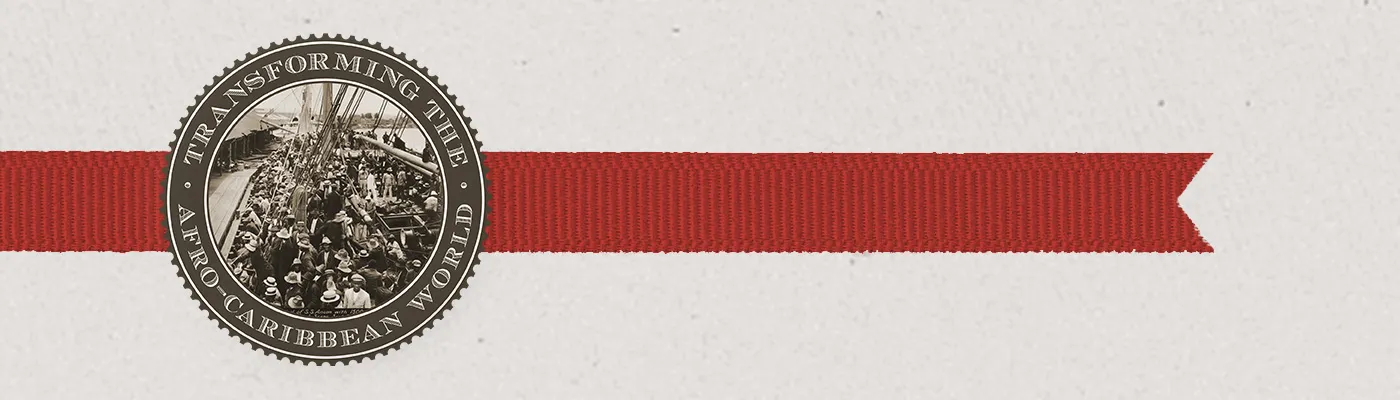
The University of Maryland’s Center for the History of the New America (CHNA) has partnered with MITH to develop the Transforming the Afro-Caribbean World (TAW) project to bring together scholars of the Panama Canal, Afro-Caribbean history, and experts in the digital humanities, data modeling, and visualization for a two-day planning workshop that will discuss a large-scale effort to explore Afro-Caribbean labor, migration, and the Panama Canal.
Enhancing Music Notation Addressability
2014 – 2015
EMA is a collaboration with the Du Chemin: Lost Voices project (Haverford College), which is reconstructing songs printed by Nicholas Du Chemin between 1549 and 1568 in Paris. We will work on music analyses already produced by students and scholars as part of the Du Chemin project and re-model them as Linked Open Data nanopublications.
Workset Creation for Scholarly Analysis Project
2014 – 2015
In collaboration with the HathiTrust Research Center (HTRC), MITH will develop a prototype application to facilitate the distributed correction and enhancement of HathiTrust metadata records. This project is part of the HTRC’s Workset Creation for Scholarly Analysis: Prototyping Project (WCSA), a two-year effort funded by the Andrew W. Mellon Foundation which aims to engage scholars in designing tools for exploration, location, and analytic grouping of materials so they can routinely conduct computational scholarship at scale, based on meaningful worksets.
Digital Humanities Winter Institute
2013 – 2013
MITH hosted the first annual Digital Humanities Winter Institute (DHWI) in January 2013, providing an opportunity for scholars to learn new skills relevant to different kinds of digital scholarship while mingling with like-minded colleagues in coursework, social events, and lectures during an intensive, week-long event located amid the many attractions of the Washington, D.C. region.
Shared Horizons
2013 – 2013
The Maryland Institute for Technology in the Humanities (MITH) invites biomedical and humanities scholars to join us in investigating data, biomedicine, and the digital humanities.
Princeton Prosody
2013 – 2013
In late 2013, MITH partnered with the Princeton Prosody Archive to build tools and modules for processing and indexing volumes from the HathiTrust Digital Library, with the goal of creating a comprehensive online archive of English-language monographs on verse meter and prosody in the public domain. These tools allow research groups like the Prosody Archive to import HathiTrust volumes into a Drupal installation for browsing, reading, full-text search, and metadata correction.
U.S. East Coast Open Annotation Data Model Rollout
2013 – 2013
The Open Annotation Data Model Rollouts were a series of three meetings organized by the members of the Open Annotation Consortium and Annotation Ontology to introduce the Open Annotation Data Model Community Specification developed through their collaboration as the W3C Open Annotation Community Group. The meetings informed digital humanities and sciences computing developers, curators of digital collections, and scholars using digital content about the W3C Open Annotation Community Group’s work. Topics included the Open Annotation Data Model, the W3C Open Annotation Community Group, existing implementations of Open Annotation producers and consumers, and developer tools and resources.
Digital Humanities Incubator (2013 – 14)
2013 – 2014
The Digital Humanities Incubator is a collaboration between MITH and the University Libraries intended to help introduce University of Maryland faculty, staff, and graduate assistants to digital humanities through a series of workshops, tutorials, “office hours,” and project consultations.
Building an Accessible Future for the Humanities
2013 – 2015
The Building an Accessible Future for the Humanities Project facilitated four two-day long workshops where humanists, librarians, information scientists, and cultural heritage professionals can learn about technologies, design standards, and accessibility issues associated with the use of digital technologies. This important project is a partnership with the BrailleSC.org project.
A Special MITH *Unconference* DHKeepsOn
2013 – 2013
In the wake of the United States federal government shutdown of 2013, the National Endowment for the Humanities was unable to hold its annual project directors meeting. But Digital Humanities can’t be stopped! MITH hosted an *unconference* and open house on the day the meeting was slated to occur, so that project directors and the public could learn about NEH-funded projects and discuss potential collaborations among attendees.

coreBuilder
2013
coreBuilder is an open source web-based visual environment for authoring stand-off markup. The tool aims at making the application of stand-off techniques more approachable in the context of Text Encoding Initiative projects dealing with multidimensional representations of text, without substantially disrupting workflows already familiar to TEI encoders.
Personal Digital Archiving 2013
2013 – 2013
PDA provides a two-day-long opportunity for researchers and practitioners in the field of personal archiving to convene for presentations and networking. The conference supports a broad community of practitioners working to ensure long term access for various personal collections and archives.
“O Say Can You See”: the Early Washington, D.C. Law and Family Project
2013 – 2015
“O Say Can You See”: the Early Washington, D.C. Law and Family Project explores multi-generational black and white family networks in early Washington, D.C., by collecting, digitizing, making accessible, and analyzing over 4,000 case files from the D.C. court from 1808 to 1815, records of Md. courts, and related documents about these families.
Topic Modeling
2012 – 2012
This 2012 workshop provided an opportunity for cross-fertilization, information exchange, and collaboration between and among humanities scholars and researchers in natural language processing on the subject of topic modeling applications and methods.

Active OCR
2012 – 2014
Active OCR: Tightening the Loop in Human Computing for OCR Correction will develop a proof-of-concept application that will experiment with the use of active learning and other iterative techniques for the correction of eighteenth-century texts.

ANGLES
2012 – 2014
ANGLES proposes a bridge between humanities centers who have greater resources to program scholarly software and the scholars who form the core user community for such software through their teaching and research.

Dedication of New MITH Space
2012 – 2012
On September 5th, 2012 MITH invited friends and colleagues present and past to help us celebrate our move to a new space.
Digital Humanities Data Curation
2012 – 2014
The Digital Humanities Data Curation Institutes project facilitated a multi-institutional collaboration to provide three workshops on data curation in the humanities.
Digital Humanities Incubator (2012 – 13)
2012 – 2013
The Digital Humanities Incubator is a program intended to help introduce University faculty, staff, and graduate assistants to digital humanities through a series of workshops, tutorials, “office hours,” and project consultations. Through a series of workshops and exercises, this first phase of the Incubator in 2012-13 concentrated on working with UMD Libraries faculty and staff exclusively. The program offered a model for nurturing digitally engaged, research-intensive librarianship, and also contributed directly to librarians’ ability to act as subject liaisons with faculty.

Review, Revise, Requery
2012 – 2013
This study considers the unlikely popularity of contemporary ekphrastic poems, particularly those by female poets in the U.S., and theorizes a broader, more complex model to explain how the genre operates, one which accounts for inter-aesthetic relationships historically labeled as outliers. Using advanced computational methods, this project challenges longstanding critical assumptions about ekphrasis.

BrailleSC
2012 – 2013
BrailleSC makes it easy for content creators to convert a text into braille, thereby extending humanities content to hundreds of thousands of visually disabled readers. BrailleSC also experiment with making braille available visually through the WordPress interface.
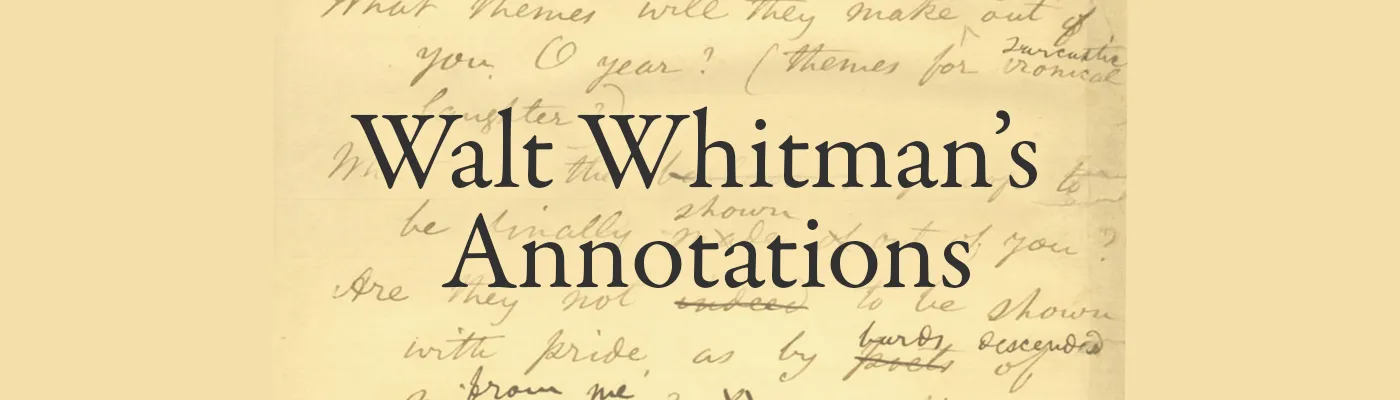
Walt Whitman's Annotations
2012 – 2014
The Walt Whitman Archive is an electronic research and teaching tool that sets out to make Whitman’s vast work, for the first time, easily and conveniently accessible to scholars, students, and general readers. Working in collaboration with the University of Texas at Austin, as well as the Center for Digital Research in the Humanities at the University of Nebraska-Lincoln, the project team is focusing on Walt Whitman’s annotations and commentary about history, science, theology, and art being discussed during his time.

BitCurator
2011 – 2014
The BitCurator project has been a joint effort led by the School of Information and Library Science at the University of North Carolina, Chapel Hill (SILS) and the Maryland Institute for Technology in the Humanities (MITH) to develop a system for collecting professionals that incorporates the functionality of many digital forensics tools.
Foreign Literatures in America
2011 – 2015
Foreign Literatures in America (FLA) is a project devoted to the recovery and understanding of the significance of foreign authored literary works, as well as immigrant authored literary works, in the U.S. throughout U.S. history. FLA pursues this goal by offering various means of studying the reception of foreign and immigrant authored literary works in the U.S., in interdisciplinary terms that encompass literature, culture, politics, history, and international relations.
Black Gotham Archive
2011 – 2012
The Black Gotham Digital Archive links an interactive web site, smart phones, and the geographical spaces of Lower Manhattan and Brooklyn to create a deeper understanding of nineteenth-century black New York.
Off the Tracks
2011 – 2011
Tanya Clement and Doug Reside led a workshop on professionalization in digital humanities centers called, “Off the Tracks-Laying New Lines for Digital Humanities Scholars,” which addressed the rapidly emerging phenomenon of alternative academic careers among the hybrid scholar-programmers now staffing many DH centers.
Shelley-Godwin Archive
2011 – 2015
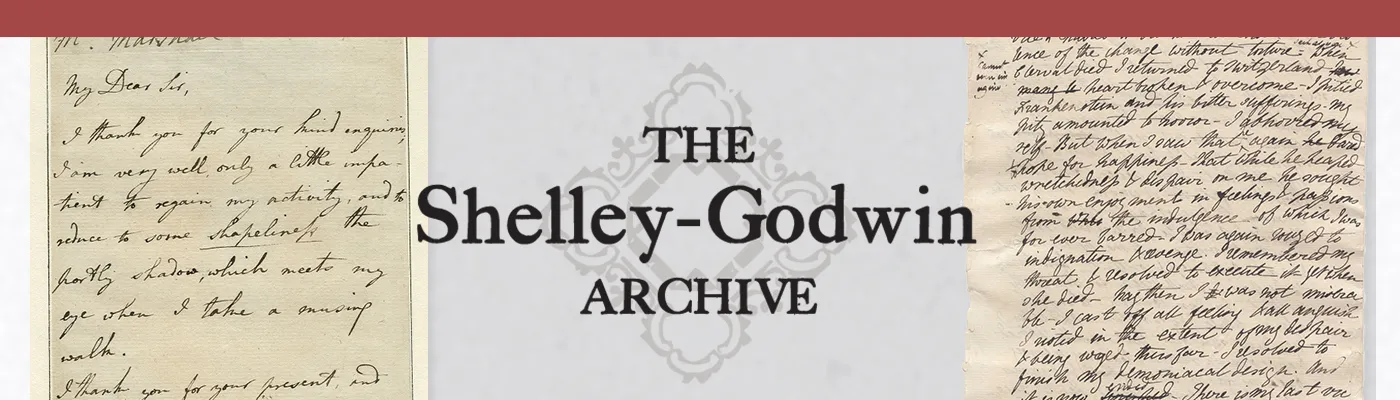
The Shelley-Godwin Archive draws primarily from the Bodleian Library, Oxford, and the Carl H. Pforzheimer Collection of Shelley and His Circle at New York Public Library (NYPL), which together hold an estimated 90 percent of all known relevant manuscripts worldwide. MITH is creating the project’s infrastructure with the assistance of the New York Public Library’s digital humanities group, NYPL Labs. With the Archive’s creation, manuscripts and early editions of these writers will be made freely available to the public through an innovative framework constituting a new model of best practice for research libraries.
Digital Mishnah
2011 – 2014
Digital Mishnah will create a digital edition of the Mishnah, a Jewish legal treatise from roughly 200 CE.
API Workshop
2011 – 2011
During February 2011, MITH hosted a workshop on developing APIs (Application Programming Interfaces) for the Digital Humanities. The workshop gathered 60 digital humanities scholars, developers, and industry leaders to demonstrate their APIs during this “working weekend.”
Bill Bly Collection
2011
The Bill Bly Collection of Electronic Literature is a rich archive of materials from the early literary hypertext movement, received as a generous donation to MITH directly from Bill Bly.
Project Bamboo
2010 – 2012
Project Bamboo was a partnership of ten research universities building shared infrastructure for humanities research. The goal of the project was to design research environments where scholars may discover, analyze and curate digital texts across the 450 years of print culture in English from 1473 until 1923, along with the texts from the Classical world upon which that print culture is based.

Corpora Space
2010 – 2012
On behalf of the Project Bamboo Consortium, twelve universities were invited by the Mellon Foundation to apply for an 18-month technology project to develop and design applications and shared infrastructure for humanities scholars and projects. MITH led Corpora Space, which allows scholars to work at the cutting edge of digital humanities and textual analysis research. In Corpora Space, scholars can discover, analyze and curate digital texts across the 450 years of print culture in English from 1473 until 1923, along with the texts from the Classical world upon which that print culture is based.
Computer Forensics and Born-Digital Content
2010 – 2010
Invitational meeting at the University of Maryland May 14-15, 2010 funded by the Andrew W. Mellon Foundation in support of a report, entitled “Computer Forensics and Born-Digital Content in Cultural Heritage Collections,” which was published by the Council on Library and Information Resources in late 2010.
Visual Accent and Dialect Archive (VADA)
2010 – 2011
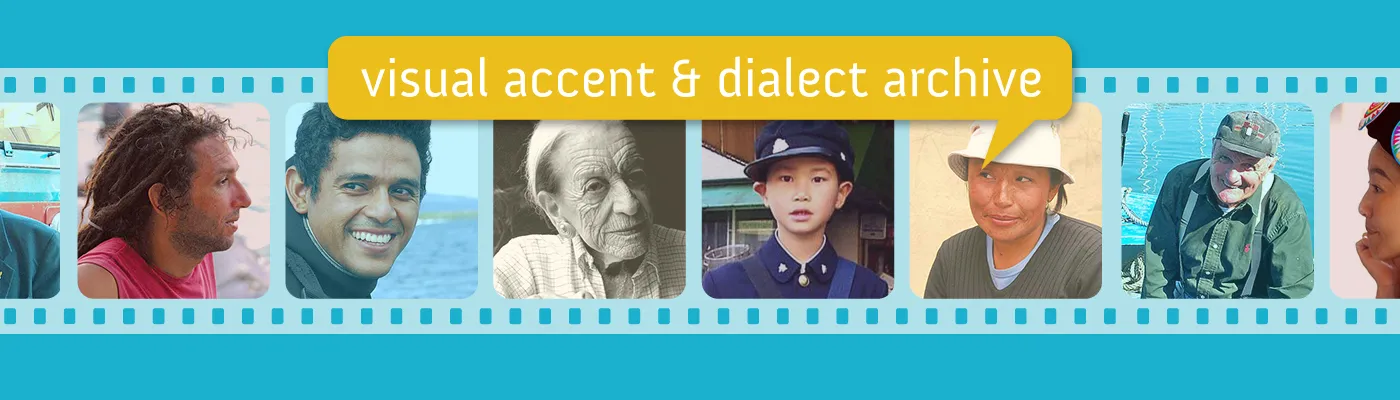
The Visual Accent & Dialect Archive (VADA) is an archive of video clips from around the world, providing both aural and visual information about a dialect or accent. Other academic speech/accent libraries and archives on the web offer only the aural aspect of learning an accent.
Digital Poetry
Comparative Textual Performances in Trans-medial Spaces
2010 – 2010
This was a project of Spring 2010 MITH Winnemore Digital Dissertation Fellow Mirona Magearu. Her dissertation, ‘Digital Poetry: Comparative Textual Performances in Trans-medial Spaces,’ extends work on notions of space and performance developed by media and poetry theorists. Magearu analyzed how contemporary technologies re-define the writing space of digital poetry making by investigating the configuration and the function of this space in the writing of the digital poem.
The Documentation and Preservation of Dance
2010 – 2011
The Documentation and Preservation of Dance project brings together an interdisciplinary team from MITH, the Advanced Computing Center for the Arts and Design (ACCAD) at Ohio State University, the John F. Kennedy Center for the Performing Arts, and the New York Public Library for the Performing Arts to host a series of workshops that will establish and document the current state of the art and push forward action on this pressing problem of dance preservation.

Preserving Virtual Worlds II
2010 – 2012
Preserving Virtual Worlds II: Methods for Evaluating and Preserving Significant Properties of Educational Games and Complex Interactive Environments (PVW2) will be conducted in partnership with the University of Illinois (lead institution), the Rochester Institute of Technology, and Stanford University. PVW2 plans to help improve the capacity of libraries, museums, and archives to preserve computer games, virtual worlds, and interactive fiction. This IMLS-funded project was a follow-up to the original Preserving Virtual Worlds I project.
Electronic Skin
Community Building and Virtual Embodiment
2010 – 2010
This was a project of Spring 2011 MITH Winnemore Digital Dissertation Fellow Maria Velazquez. Her dissertation, “Electronic Skin: Community Building and Virtual Embodiment” investigated the creative processes through which citizens are made, with particular attention to the role that technologies like blogging, virtual reality, and electronic activism foster the use of “imaginative embodiment” in creating stories of citizenship, selfhood, and action.

Collaborative Ajax-Based Modeling Platform
2009 – 2010
CAMP stands for ‘Collaborative, Ajax-Based, Modeling Platform.’ As the name suggests, this tool is an open source, collaborative, 3-dimensional modeler that allows users with very little experience to generate a 3-dimensional model in their web browser which they can then allow other users to both view and edit. The tool was initially used to construct an international database of pre-nineteenth century theater buildings, but was designed to be intentionally generic so that scholars interested in structures of any sort could easily port it into their own projects.

Digital Humanities 2009
2009 – 2009
Digital Humanities 2009-the annual joint meeting of the Association for Computers and the Humanities, the Association for Literary and Linguistic Computing, and the Society for Digital Humanities / Société pour l’étude des médias interactifs-was hosted by the Maryland Institute for Technology in the Humanities (MITH) at the University of Maryland in College Park.
Open Annotation Collaboration
2009 – 2013
Facilitating the emergence of a Web and Resource-centric interoperable annotation environment that allows leveraging annotations across the boundaries of annotation clients, annotation servers, and content collections.
Archimedes Palimpsest
2009 – 2010
This thirteenth century prayer book contains erased texts that were written several centuries earlier, including two treatises by Archimedes that can be found nowhere else, The Method and Stomachion. MITH worked with the Walters Art Museum to develop an interactive interface for the detailed study of this manuscript.
Text-Image Linking Environment
2009 – 2011
The Text-Image Linking Environment (TILE) is a web-based tool for creating and editing image-based electronic editions and digital archives of humanities texts.
Theatre Finder
2009 – 2011
Theatre Finder is a collaboratively edited, peer reviewed, online database of historic theatre architecture from the Minoan “theatrical areas” on the island of Crete, to the last theatre built before 1815.

Music Theatre Online
2008 – 2010
Music Theatre Online, based at the Maryland Institute for Technology in the Humanities, is a digital archive of texts, images, video, and audio files relating to musical theater. The best printed editions of musical theater texts cannot fully provide the experience of simultaneous expression of verbal, musical, and terpsichorean languages so necessary to fully understand the art form. Using the multimedia capabilities of the modern web browser, we created a better framework for studying these important works of drama.
Shakespeare Quartos Archive
A Digital Collection of Pre-1642 Editions of Shakespeare's Plays
2008 – 2009
The Shakespeare Quartos Archive is a digital collection of pre-1642 editions of William Shakespeare’s plays. A cross-Atlantic collaboration has produced an interactive interface for the detailed study of these geographically distant quartos, with full functionality for all thirty-two quarto copies of Hamlet held by participating institutions.

Soweto `76, A Living Digital Archive
2008 – 2008
The goal of Soweto ‘76 is to provide users with virtual access to the history of Soweto, a Black township outside Johannesburg, so that they may experience a significant period in South Africa’s history. Using existing oral histories, testimonies, photographs, video footage, material objects, and sound recordings in the collections of the Hector Pieterson Memorial & Museum, the work seeks to redress the existing portrayal of the lives of township residents in the mainstream or “official” historical record.

Born-Digital Literary Materials
2008 – 2009
This project consisted of a series of site visits and planning meetings among personnel working with the born-digital components of three significant collections of literary material: the Salman Rushdie papers at Emory University’s Woodruff Library, the Michael Joyce Papers at the Harry Ransom Humanities Research Center at the University of Texas at Austin, and the Deena Larsen Collection at the Maryland Institute for Technology in the Humanities (MITH) at the University of Maryland.

Preserving Virtual Worlds I
2008 – 2010
Between 2008 and 2010, MITH partnered with the University of Illinois at Urbana-Champaign, Stanford University, the Rochester Institute of Technology, and Linden Lab (creators of Second Life) for a project funded by the Library of Congress’s National Digital Information Infrastructure and Preservation Program (NDIIPP) on Preserving Virtual Worlds. The project, supported by NDIIPP’s Preserving Creative America program, explored methods for preserving digital games, interactive fiction, and shared real time virtual spaces. Major activities include developing basic standards for metadata and content representation and conducting a series of archiving case studies for early video games and electronic literature, as well as Second Life, the popular and influential multi-user online world.
MITH's Vintage Computers
2008
MITH’s Vintage Computers is a website devoted to MITH’s sizable (and growing) collection of vintage computers, retro software, and other artifacts from the early era of personal computing. The centerpiece of the site is a considered metadata and modeling approach to computing hardware, whereby individual components of the vintage machines are documented, contextualized within their relation to the system as a whole, and expressed using Dublin Core. The site gathers links to other recent MITH projects in born-digital cultural heritage, and serves as a clearing house for our expanding portfolio in this area. It also includes newly written non-specialist’s documentation for the FC5025 Floppy Disk Controller, a device used to retrieve data off of obsolescent media formats.

Future of Electronic Literature Symposium
2007 – 2007
The Electronic Literature Organization’s Future of Electronic Literature Symposium at MITH at the University of Maryland, College Park was a May 2007 event that brought e-lit writers, scholars, and an interested public together for an open mouse/open mic, a daylong symposium, and an ELO board meeting.
Digital Diasporas
2007 – 2008
Digital Diasporas was the first conference of its kind to bring together to discuss on-going projects and also debate the theoretical, methodological, and pedagogical issues raised by the intersection of the fields of Digital Humanities and African American/African Diaspora Studies.
Constitutional Regime Leadership in a World of States
2007 – 2007
This was a project of Spring 2007 MITH Winnemore Digital Dissertation Fellow Michael Evans. At the time of his fellowship, Michael’s dissertation was entitled “Constitutional Regime Leadership in a World of States,” and involved the use of digital technologies to analyze the public and private writings of Jefferson, Madison, and Hamilton to better establish how their core beliefs about the nature and the causes of war and peace influenced their views on constitutional design
MONK
Humanities Text Mining in the Digital Library
2007 – 2009
MONK stands for Metadata Offer New Knowledge, and was a digital environment designed to help humanities scholars discover and analyze patterns in the texts they study. It supported both micro analyses of the verbal texture of an individual text and macro analyses that let you locate texts in the context of a large document space consisting of hundreds or thousands of other texts.
Digital Theatre
2007 – 2007
This was a Spring 2007 MITH Winnemore Digital Dissertation Fellowship project of Nadja Masura. Her dissertation, “Digital Theatre,” examined the ways that digital technology-such as animation, video, motion capture/sensing, and internet broadcasting-when used along with “live” co-present actors, expands our ideas of body, place, and community.
Ajax XML Encoder (AXE)
A Web-based Tool for Metadata Tagging
2007 – 2009
AXE is a web-based tool for “tagging” text, video, audio, and image files with XML metadata, a process that is now a necessary but onerous first step in the production of digital material.
Musical Theatre Studies Blog
2007 – 2009
In 2007, MITH worked with former Associate Director Doug Reside to develop and host an online blog called Musical Theatre Studies, an online hub for news and discussion relating to the academic study of musical theatre which featured calls for papers, academic job opportunities, book reviews, and other news items of interest to the musical theatre scholarly community. The blog was maintained sporadically until 2009, and MITH now maintains it as a legacy website.
Our Americas Archive Partnership
2007 – 2010
The Our Americas Archive Partnership is a collaboration between MITH’s Early Americas Digital Archive and Rice University’s Americas Archive, Rice’s Humanities Research Center, Rice’s Fondren Library and the library at Instituto Mora in Mexico. Its goal is to make digitally available texts written in or about the Americas that represent the full range and complexity of a multilingual “Americas” including Canada, the Caribbean, and Latin America.
Deena Larsen Collection
2007
MITH received the gift of Deena Larsen’s personal collection of early-era personal computers and software in May 2007. Deena is an author and new media visionary who has been active in the creative electronic writing community nearly since its inception in the 1980s. In addition to being a writer and thinker, Deena has also been a collector and an amateur archivist (or, as we say of amateurs, a hoarder). Deena’s collection at MITH furnishes us with invaluable source material which will further both our in-house research in digital curation and preservation, as well as function as a primary resource for researchers interested in early hypertext and electronic literature.
Nannie Helen Burroughs Electronic Editions
2006 – 2006
This was a Winnemore Digital Dissertation Fellowship project of Michele Mason in 2006, for which Michele produced a scholarly electronic edition of several key texts by Civil Rights leader Nannie Helen Burroughs, highlighting her influence as a leader of African-American women, a political organizer, and a columnist in the African-American press.
Summit Meeting for Planning a Coalition of Digital Humanities Centers
2006 – 2007
Funded by a grant from the NEH, the purpose of this meeting was respond to the ACLS Cyberinfrastructure Commission’s call for digital humanities centers to become key nodes of cyberinfrastructure in the United States. The summit was especially concerned with assessing the value of and the desire for greater collaboration and communication among the centers; among the funders; and between both groups.
centerNet
2006 – 2018
centerNet is an international network of digital humanities centers formed for cooperative and collaborative action to benefit digital humanities and allied fields in general, and centers as humanities cyberinfrastructure in particular. Since its inception in April 2007, centerNet has added over 200 members from about 100 centers in 19 countries.
Saraka and Nation
2006 – 2008
Concerned, thematically, with postcolonial cultural formations, and in particular the experience of the African Diaspora, the Saraka and Nation project traces connections between cultures of Africans in the Americas and sites of memory in Africa.

Digital Dialogues
2005
Romantic Circles
2005 – 2017
Romantic Circles is a refereed scholarly website devoted to the study of Romantic-period literature and culture. It is the collaborative product of an ever-expanding community of editors, contributors, and users around the world, overseen by a distinguished Advisory Board, currently serving approximately 3.5 million pages each year to users in over 160 countries around the world.
Multilingual Thesaurus for Medieval Studies
2005 – 2005
The Multilingual Thesaurus for Medieval Studies (MLTMS) links terms, i.e. word-forms, with the same meaning, i.e. concept, in the core languages of contemporary studies of the Middle Ages. MLTMS enables scholars to search a variety of electronic resources in different languages at a conceptual level whilst being based on both common and technical word-forms in the major languages used by scholars and other interested parties. Cross-language retrieval of search-results is therefore possible from a number of query-languages. MLTMS is an open source reference tool available to producers of reference works in medieval studies, both large and small.
University Slots, Maryland Day 2004
2004 – 2004
“Education costs, but education pays!” Featured at MITH on Maryland Day 2004, this application featured MITH’s projects as items on a slot machine, giving everyone the chance to try their luck at the costs and payoffs of education.
Research for 'Mechanisms: New Media and the Forensic Imagination'
2004 – 2005
MITH Associate Director Matthew Kirschenbaum completed a Fellowship project in 2004-05, which consisted of research toward the completion of his first book, Mechanisms: New Media and the Forensic Imagination. Mechanisms was published by the MIT Press in early 2008.
Reading at Risk
2004 – 2004
Reading at Risk was a panel discussion held at the University of Maryland’s McKeldin Library in the Fall of 2004, sponsored by MITH and the Department of English, in response to the NEA’s “Reading at Risk” report documenting 10% national decline in “literary reading” since 1982.
Just a Click Away From Home
Ecuadorian Migration, Nostalgia, and Technology in Transnational Times
2004 – 2006
Silvia Mejia was a Clara and Robert Vambery Distinguished Graduate Fellow and MITH Graduate Fellow during academic years 2004-05 and 2005-06. Working from within the Comparative Literature program with John Fuegi, and with MITH Director Martha Nell Smith, Mejia focused on three different narrations of migration from Ecuador to the United States, Spain and Italy. The resulting documentary video and its study guide explored how new technologies such as the Internet, satellite communications, email, videoconferences, and cell phones have changed the experience of displacement.
The Sound of the Emperor's Voice
Japanese Creative Responses to the Allied Occupation
2004 – 2004
On a hot and sweltering day on August 15, 1945, the Japanese people gathered around their radios at 12:00 noon for an important announcement. At the appointed hour, they heard, for the first time, through the static, the sound of their Emperor’s voice, and they learned that their country would soon be occupied by United States forces, marking the end of nearly 15 years of warfare. This site combines artist’s reactions to the occupation with material that contextualizes these responses.
Gwendolyn Brooks Poetry Slam
2004 – 2004
On April 24, 2004, the University of Maryland held its annual open house for the state’s citizens, Maryland Day, and the David C. Driskell Center and MITH co-produced the Gwendolyn Brooks Poetry Slam, an event designed to bring high school students, university students, and university faculty together to celebrate African-American literary heritage.
'Mined to Death' Documentary Film
2003 – 2004
The documentary was a project of 2003-04 MITH Fellow Regina Harrison. It depicts miners in Potosi, Bolivia, who extract silver, zinc, and lead from the mountain in the same precarious conditions as their ancestors did five centuries ago. Tourist agencies and transnational mining companies promise to bring in additional revenue for the miners, but it is apparent that the ‘rich’ mountain is dying.
Occupied Japan 1945-1952: Gender, Class, Race
2003 – 2003
This site was constructed with the goal of incorporating Japanese women into the history of the Occupation period, 1945-1952, immediately following Japan’s defeat in World War II. Another goal in making this site is to encourage research in gender topics and enhance undergraduate studies on Japan across all disciplines from the humanities to the social sciences and sciences.
Business Russian Case Studies
2002 – 2002
This web-based language learning project was developed by 2001 MITH Faculty Fellow, Professor Maria Lekic from Asian and East European Languages and Cultures. The project involved the teaching and analysis of adult foreign language acquisition within relatively unscripted naturalistic settings through the design of computerized modules for individual or classroom involving specialized vocabularies (such as Russian for business use, space science, etc.).
DISC: A Disabilities Studies Academic Community
2002 – 2005
The DISC website was a MITH Fellowship project of Rosemarie Garland-Thomson, and was an outgrowth of her early work, begun in the mid-1990’s, attempting to establish disability studies as a legitimate academic field of study. The DISC site was an international, interdisciplinary, user-generated, digital forum providing support, collegial networks, and information that sustains a disability studies academic community and promotes disability studies in a humanities focus.
Early Americas Digital Archive
2002 – 2003
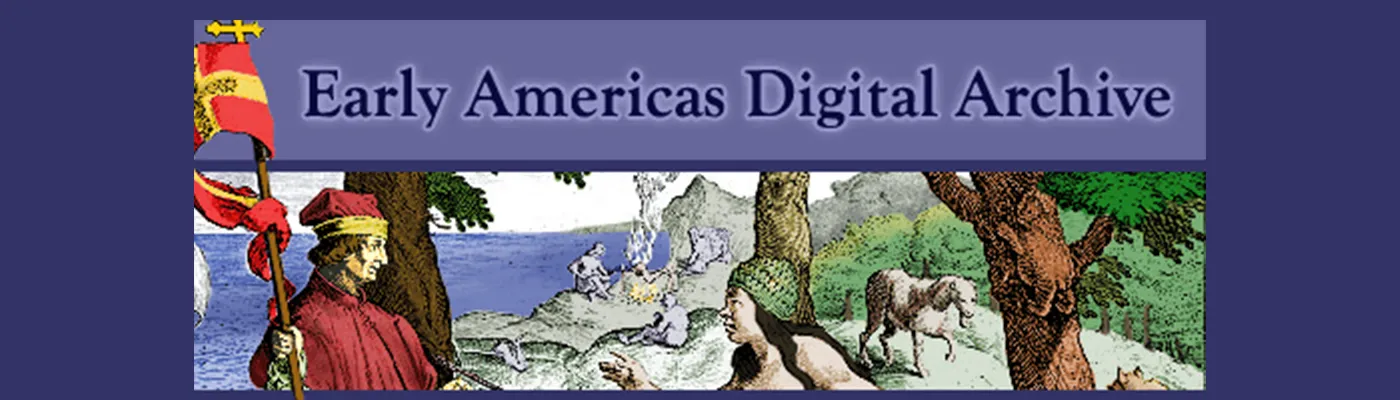
The Early Americas Digital Archive (EADA) is a collection of electronic texts and links to texts originally written in or about the Americas from 1492 to approximately 1820. Open to the public for research and teaching purposes, EADA was published and supported by the Maryland Institute for Technology in the Humanities (MITH) under the general editorship of Professor Ralph Bauer, at the University of Maryland at College Park.

Hughes@100
2002 – 2002
These two MITH-sponsored events were held in celebration of the 100th anniversary of the birth of one of America’s great literary forces, the poet Langston Hughes. The first event was a Poetry Slam produced in collaboration with Border’s Books & Music, the David C. Driskell Center for the Study of the African Diaspora, the Clarice Smith Center and the Committee on Africa and the Americas. The second event, Langston’s First Book of Jazz, was a collaboration with the Smithsonian Institution’s America’s Jazz Heritage Program (A Partnership of the Lila-Wallace Readers Digest Fund), and the Program in African American Culture of the National Museum of History. It was held on February 25, 2002 in Carmichael Hall at the National Museum of American History.\r\n
Rethinking the Americas: Teaching History Outreach Project on the Americas
2002 – 2002
Rethinking the Americas Teaching History was an educational outreach project created as a collaboration between the University of Maryland’s Department of History, the David C. Driskell Center, and Montgomery County Public Schools. This three-year project was designed to enrich teachers’ understanding of history, and improve student learning among Montgomery County middle and high schools.
Narratives That Heal
2002 – 2002
This was a 2002 Faculty Fellowship project of Professor Carolina Robertson from the Ethnomusicology Department. Based on the core premise that creativity is not necessarily a state of grace rooted in innate talent or skill, a series of seminars were offered through the University’s ‘Teachers as Scholars’ program, in which teacher participants explored their own life narratives as doorways to creativity against a backdrop of parallel stories from other cultures. Dr. Robertson worked with a MITH programmer to develop an interactive website with malleable texts, sounds and images as the dynamic outcome of this process.
LGBT Studies Program
2002 – 2002
The LGBT Studies Program, like the programs and departments in Afro-American Studies, Asian American Studies, Jewish Studies, Latin-American Studies, and Women’s Studies that preceded it, is part of the institution’s broad and deep effort to transform curricula to reflect new developments in multicultural scholarship and to provide students with a set of educational experiences that convey some sense of the diversity of human cultures.

Steinschneider Bibliographic Database
2002 – 2004
The Steinschneider Bibliographic Database is a digitized relational database for the study of pre-modern Jewish philosophy, science, and belles-lettres, based on the standard reference-work, Die Hebraeischen Ubersetzungen des Mittelalters und dir Juden als Dolmetscher (The Hebrew Translations of the Middle Ages and the Jews as Interpreters, henceforth HU).

The Versioning Machine
2002 – 2002
The Versioning Machine was a display environment designed specifically for displaying and comparing deeply-encoded, multiple versions of texts, including a robust typology of notes and bibliographic information. It also displayed manuscript images of each version in an applet which provides for several image enhancement features (such as increased/decreased contrast, image enlargement/reduction, etc. In short, it proved an electronic environment for creating a critical electronic edition. The Versioning Machine made its debut at the 2002 ALLC/ACH (Association for Literary and Linguistic Computing/Association for Computers and the Humanities) Conference in Tübingen, Germany, July 2002.

Virtual Lightbox
2002 – 2004
The Virtual Lightbox is a software tool for comparing images online. It exists in two versions, an application and an applet (both programmed in Java). The applet version, which is newly developed, furnishes what we believe to be an extremely flexible environment for online image comparison. Its primary audience is developers who wish to add an image comparison tool to a Web-based image collection. Simple server-side scripting allows users to populate the Lightbox applet in any number of ways. The application version, which was developed earlier, allows users to share images in peer-to-peer fashion: all users participating in a common session see the same images in the same on-screen configuration at the same time. Movement of an image and other operations are all globally propagated in realtime. Thus the application version functions as an image-based whiteboard.

Irish Resources in the Humanities
2002 – 2006
Irish Resources in the Humanities was developed in 1999 by Dr. Susan Schreibman as a Gateway to sites on the World Wide Web that contain substantial content in the various disciplines of the humanities in the area of Irish Studies. As a rule, commercial sites are not linked.
The Thomas MacGreevy Archive
2001 – 2004
The Thomas MacGreevy Archive is a long-term, interdisciplinary research project that explores the life, writings, and relationships of the Irish poet and critic, Thomas MacGreevy (1893-1967). The project is committed to investigating the intersections between traditional humanities research and digital technologies.

Emily Dickinson
Technology and Mythobiography
2001 – 2001
This was a 2001 Faculty Fellowship project of Professor Carol Burbank from the Department of Theatre. Employing two different models of performative technology, a series of interactive templates for student experiments in writing, and a web collage or performance “fugue,” Dr. Burbank explored the way pastiche and narrative function within a technological frame.
Flare Productions
2001 – 2001
Flare Productions is a not-for-profit filmmaking organization. Professor John Fuegi (with partner Jo Francis), completed a 2001 MITH Faculty Fellowship for which they produced a film as part of the Women of Power series of films, a series of thirteen films which showcase the accomplishments of women over the last 150 years. They completed one film in the series, entitled They Dreamed Tomorrow, chronicling the contributions of Ada, Countess Lovelace (1815-1852), Lord Byron’s daughter, and Charles Babbage (1791-1871) to the early history of computing. Fuegi and Francis also produced a website and DVD to complement the film.

The Barnwell/Robinson Family Archives
2001 – 2002
This was the MITH Networked Associate Fellowship project of Ysaye Maria Barnwell, a renowned musician, composer, actress teacher and choral clinician in African American cultural performance. Barnwell’s project aimed to produce a multimedia digital presentation about her family, which eventually became the Ellis Barnwell Robinson Archives. The fellowship also provided support for Barnwell to prepare materials for an exhibit with the potential for traveling, and to prepare materials for inclusion in a book of photos and letters.
Digital Directions
Arts, Humanities, and Technology: A Seminar for High School Students
2001 – 2003
Over three consecutive summers between 2001 and 2003, MITH worked with the College of Arts and Humanities at the University of Maryland to organize Digital Directions, three separate one-week, intensive seminar for high school students to explore the use of technology in the arts and humanities. Digital Directions aimed to provide enrichment for high school students by exploring the interdisciplinary nature of technology and its cutting edge application in the fields of arts and humanities.
Spain/Online
2001 – 2001
In Fall 2000, the University of Maryland School of Music voted unanimously to begin offering its Masters of Ethnomusicology program in a combined residential/online program with the goal of targeting students in Latin America and Spain through courses taught primarily in Spanish. Former MITH Faculty Fellow Carolina Robertson, who eventually worked on the Narratives That Heal project, collaborated with MITH on the development of the online learning environment for this Distributed Learning Masters, making Spain/Online an early ‘MITH Affiliate.’
Learning from Langston Terrace
2001 – 2001
Langston Terrace is the nation’s first public housing program built in Washington, D.C. Opened in 1937, Langston Terrace housed Black low-income, working class families; it was one of 51 racially segregated projects built by the Public Works Administration as part of the New Deal. In collaboration with Kelly Quinn from UMD’s Department of American Studies, MITH staff assisted with the creation of a website, Learning from Langston Terrace, which sought to commemorate the history of the community by compiling and offering primary sources for visitors. The materials on the site were meant to augment user’s experiences and memories of Langston and the scholarly literature.
Women's Studies Database
2001 – 2003
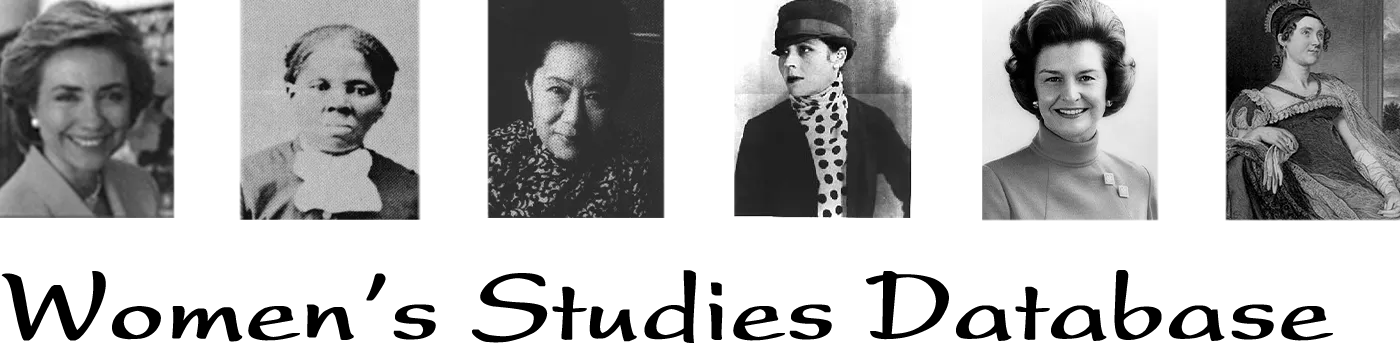
The University of Maryland Women’s Studies Database, begun in September 1992 and continued/developed later at MITH, serves those people interested in the women’s studies profession and in general women’s issues. Designed in collaboration with researchers, program administrators and information specialists in women’s studies, the database contains links to bibliographies, announcements, conferences and calls for papers, and other references relevant to the discipline.
The Portinari Project
2001 – 2002
The Portinari Project was one of the initial MITH Networked Associate Fellowship projects. MITH worked with João Candido Portinari, son of the late painter Candido Portinari, on a digital resource to make his work and legacy available broadly on the web.
Mapping the Missions
The Jesuit-Guaraní Republic, 1754-2000
2001 – 2002
Daryle Williams, Associate Professor of History, worked with MITH on an interactive digital historical atlas of the Jesuit-Guaraní missions (located in the Paraná-Uruguay watershed, along the borders of Argentina, Brazil, and Paraguay). Making use of text encoding, image mapping, and interactive media technology, the atlas explores the missions’ evolution from remote colonial-era missionary settlements to UNESCO World Heritage sites. A parallel objective is the integration of textual and visual sources in humanistic scholarship.
RCCS: Resource Center for Cyberculture Studies
2000 – 2001
The Resource Center for Cyberculture Studies was an online, not-for-profit organization whose purpose was to research, teach, support, and create diverse and dynamic elements of cyberculture. Collaborative in nature, RCCS sought to support ongoing conversations about the emerging field, to foster a community of students, teachers, scholars, explorers, and builders of cyberculture, and to showcase various models, works-in-progress, and on-line projects. As of 2002, the site contained a collection of scholarly resources, including university-level courses in cyberculture, events and conferences, an extensive annotated bibliography, and two full-length book reviews each month. RCCS was originally founded by David Silver in 1996 at UMD, and became part of a MITH Networked Associate Fellowship awarded to Silver in 2000-2001.
International Virtual Potluck
2000 – 2001
This was a MITH Fellows Project of American Studies professor Jo Paoletti. The Intercultural Virtual Potluck featured a Virtual University of Maryland South Campus Dining Hall in order to research various aspects of racial, sexual, and ethnic tensions in human interaction. This project was part of a much larger project Paoletti worked on during and after her fellowship time at MITH, entitled The Intercultural Learning Center (ICLC), one of the first online digital pedagogical resources and online learning environments in the early days of distance learning.

Beckett Directs Beckett
2000 – 2001
Photographs, video clips, and other media documenting the 1985 television productions of Beckett’s “Waiting for Godot” and “Krapp’s Last Tape”.
John Milton's Comus
2000 – 2001
This was a project of a group of Networked Associate Fellowships awarded to three English graduate students: Helen L. Hull, Meg F. Pearson, and Erin A. Sadlack. The goal was to construct a significant scholarly online resource for studying John Milton’s A Maske, familiarly known as Comus. The choice of this particular work was made due to its various interpretations and forms (text, hypertext, pictoral and musical). The site consists of four core content sections: a textual archive, multimedia representations, critical essays, and a bibliography.
Feminism and Writing Technologies
2000 – 2000
King’s Feminism and Writing Technologies was an early MITH Faculty Fellow project which featured a virtual 17th-century Quaker women’s printshop designed to plumb more fully (by reconfiguring objects of study) the intertwinings of print and digital distributions of knowledge production and their implications for research in the twenty-first century university.
Dickinson Electronic Archives
1999 – 2005
The Dickinson Electronic Archives (DEA) is a website devoted to the study of Emily Dickinson, her writing practices, writings directly influencing her work, and critical and creative writings generated by her work.
Schuylkill: A Creative and Critical Review
1997 – 2005
This was one of the first MITH Networked Associate Fellowship projects. Elizabeth Abele, who at that time was a PhD candidate at Temple University, and who worked with MITH to enhance the web version of the Schuylkill Graduate Journal. Created by English graduate students at Temple University in January 1997, Schuylkill Graduate Journal is an interdisciplinary graduate journal designed to enhance Confidence; Community; and Curriculum vitae.